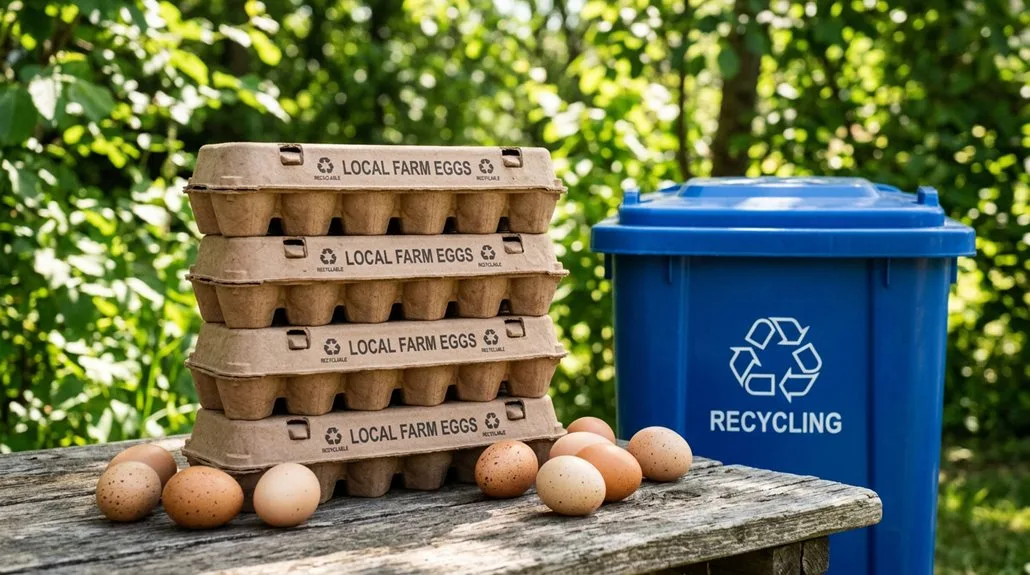
You think recycling cardboard egg cartons is as simple as tossing them in the bin? Think again. South Africa does accept them — but most people are doing it completely wrong, and their good intentions are quietly making things worse. The preparation matters. The drop-off point matters. Even the condition of the carton matters. Get any one of these wrong, and your “recycling” ends up in a landfill anyway. Here’s exactly what you need to know to actually make a difference.
Cardboard Egg Cartons Are Recyclable in South Africa
Egg cartons are classified as common mixed waste (CMW), alongside cereal boxes. They’re made from recycled low-grade paper and cardboard. This means recycling them returns useful material directly to mills.
Here’s a great result worth knowing: recovered paper can be recycled up to 25 times. South Africa achieves a 70% average paper recovery rate, making paper the second-most recovered material nationally. You can drop egg cartons at shopping centre recycling zones or neighbourhood collectors who accept brown cardboard. Suppliers like Cool Pack cc in Paulpietersburg, KwaZulu-Natal, stock a wide range of egg packaging products made to support responsible handling and reuse across the supply chain.
Cardboard egg cartons are also accepted in the green bin, where they help absorb moisture and odours while providing carbon that contributes to quality compost.
How to Prepare Your Egg Cartons Before Recycling
Before tossing your egg cartons into the recycling bin, take a few simple steps to prepare them correctly. Rinse each carton under cool water to remove egg residue. Avoid hot water, as it warps paperboard material.
| Preparation Step | Key Detail |
|---|---|
| Cleaning | Rinse under cool water only |
| Drying | Air dry completely before recycling |
| Contaminant Removal | Remove eggshells and debris |
| Flattening | Collapse cartons flat to save space |
| Material Check | Confirm paperboard, not foam or plastic |
You’ll get a great result by adhering to these steps consistently. Stack flattened cartons neatly for efficient collection. Discard any cartons with grease stains or plastic coatings, as these compromise your recycling programme’s CMW grade paperboard standards. Farmers and agricultural businesses across KwaZulu-Natal and Mpumalanga rely on proper packaging disposal practices to maintain sustainable operations. Keep in mind that plastic and foam cartons are not compostable and require separate disposal consideration entirely.
Where to Recycle Egg Cartons in South Africa
Across South Africa, several reputable recycling networks accept cardboard egg cartons at convenient drop-off points. You’re part of a growing community making a real difference. Here are three reliable options:
- Mpact Recycling operates 14 facilities nationwide and partners with over 40 buy-back centres for paper and cardboard.
- FMSA Buy-Back Centres in Johannesburg and Pretoria offer fair prices, accurate weights, and clean facilities with parking.
- Quattro Waste Traders in Cape Town’s Stikland accepts sorted waste, offering immediate cash or EFT payments.
You can also use Petco’s online map to locate drop-off sites near you. Rebox operates professional cardboard recycling centres across Johannesburg. For businesses and farms in KwaZulu-Natal, agricultural packaging supplies are also available through local specialists who can advise on responsible disposal and recycling practices.
Together, these networks support 60,000–90,000 people in South Africa’s recycling economy — a great result for everyone involved. The FMSA Buy-Back Centre, located at Waltloo Centre, Battery Street, Pretoria, also serves as a hub where street waste pickers can drop off, sort, and sell recyclables for instant cash pay-out.
Why Recycling Egg Cartons Matters for SA’s Environment
Now that you know where to drop off your cardboard egg cartons, it’s worth grasping why the effort matters. South Africa’s environment benefits directly when you recycle paper packaging. In fact, 53% of South Africans select paper as the best material for the environment.
Paper egg cartons break down naturally, unlike plastics that persist in landfills for centuries. Moulded pulp cartons carry a markedly lower carbon footprint than plastic alternatives. You’re contributing to a measurable shift every time you recycle. Businesses that prioritise sustainable packaging often stock single wall cake boxes and other paper-based solutions that are designed with recyclability in mind.
South African regulations, including NEM:WA 2008, actively support recyclable paper packaging through a waste hierarchy structure. Moreover, 62% of respondents note that local brands are introducing more sustainable packaging. Your recycling choices align you with a growing community driving real environmental progress across South Africa. However, it is worth noting that cardboard egg cartons soiled by broken eggs often cannot enter the paper recycling stream and must go to residual waste instead.
What Happens to Egg Cartons After They’re Recycled?
Once your egg cartons reach a recycling facility, they begin a structured process back into useful products. The fibres are sorted, repulped, and manufactured into new materials. Here’s where your recycled egg cartons typically end up:
- New egg trays and cardboard boxes for packaging
- Grocery bags and newspaper products
- Lower-grade manufacturing materials like cereal boxes and shoeboxes
South Africa recycled nearly 1.3 million tonnes of paper packaging in 2022 — a great result for the industry. Facilities like Mpact paper mills process recovered cartons through six to nine months of supply chain steps. You’re part of a community achieving a 67% paper recycling rate nationally. Your participation keeps precious fibre out of landfills and returns it directly to manufacturing. For farmers and food producers looking to source sustainable options, suppliers like Cool Pack cc offer moulded egg cartons as part of their agricultural packaging range. Keep in mind that styrofoam egg cartons cannot be included in this process and must be disposed of in regular rubbish instead.