Most pizza delivery boxes end up mangled, leaking grease, and stone cold — not because of the driver, but because nobody folds them correctly. Corrugated takeaway boxes have interlocking tabs and double-wall flaps that punish even the most confident hands. One wrong fold creates gaps that bleed heat and invite disaster. The difference between a perfect seal and a soggy mess comes down to a technique almost nobody talks about. The full step-by-step breakdown, from workspace setup to lid alignment, is waiting below.
What Makes Corrugated Pizza Boxes Different to Fold?
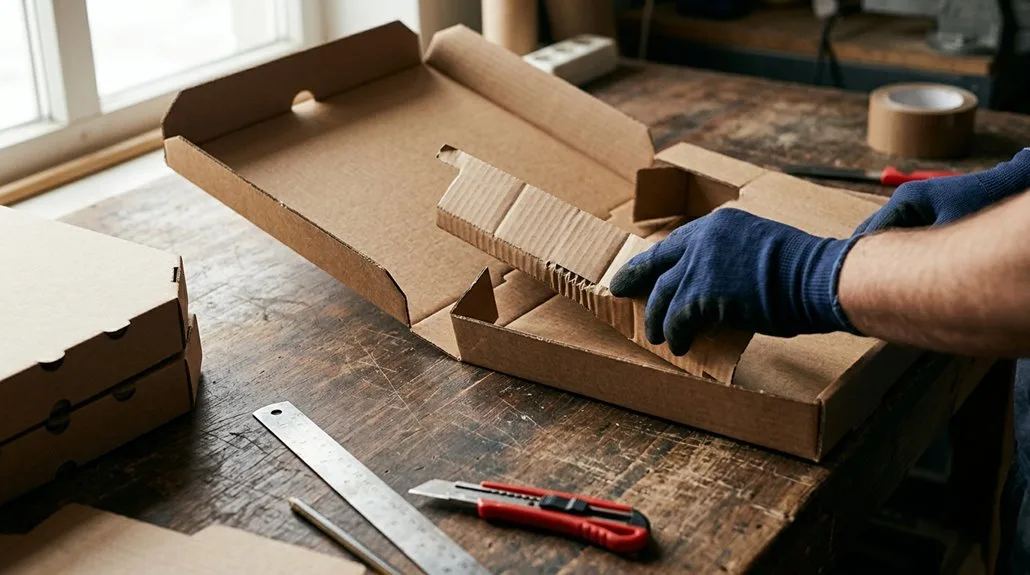
Corrugated pizza boxes are structurally different from standard cardboard boxes, and that difference directly affects how you fold them. The material features a fluted middle layer sandwiched between two flat liners. This construction creates superior strength and insulation, keeping your pizzas hot during transport.
That layered design also makes folding more demanding. You’ll notice the material is thicker and stiffer than standard cardboard, requiring noticeably more pressure to form clean creases. Pre-scored lines are present, but they resist bending due to the corrugated construction. Corrugated pizza boxes are available in multiple sizes, including 10 x 10 inch and 12 x 12 inch options, to accommodate different pizza sizes with a secure, well-fitted fold.
Here’s what sets corrugated boxes apart:
- Thickness exceeds standard cardboard markedly
- Fluted layers cause bulkier, less crisp folds
- Tabs and slots must lock tightly to prevent collapse
Once you grasp these differences, you’re already ahead of most beginners. Corrugated boxes are widely regarded as the standard in industry due to their exceptional durability and ability to protect pizzas throughout the entire delivery process.
Set Up Your Workspace Before Folding a Pizza Box
Before folding a single flap, you’ll want your workspace fully prepared. Choose a flat, stable surface to prevent warping or uneven folds in the corrugated material. Avoid sloped or uneven areas entirely.
Keep your workspace spotless before handling any box. A clean surface prevents pizza sauce from absorbing onto the box exterior and reduces food residue transfer during setup. This maintains hygiene standards your customers expect. A kitchen paper towel nearby allows you to quickly wipe down your surface between box setups without interrupting your workflow.
Place the box flat on your chosen surface. This positions it correctly for inspection and gives you access to all flaps and panels. Check quickly for missing flaps, replacing any incomplete boxes immediately.
Orient the box with the restaurant logos facing downward. This guarantees branding appears correctly on the completed box, presenting a professional appearance every time. Preparing your entire space beforehand ensures the folding process runs smoothly from start to finish.
How to Fold the Bottom Half of a Pizza Box
Once your workspace is ready, you can start folding the bottom half of the pizza box. Lay the box flat and check for missing flaps or parts. Discard it if anything’s absent. Position exterior logos facing downward.
Follow these steps for a great result:
- Fold the side panels inward toward the centre.
- Bend the tabs on the side panels downward into the bottom slots.
- Fold the lower flap inward to retain pizza warmth.
- Make sure the lower flap integrates securely with the side panels.
This tab-and-slot mechanism locks the bottom structure intact, preventing separation during transport. You’ll find this common in corrugated takeaway designs. For additional packaging needs, Cool Pack CC offers a range of solutions available from their location in Paulpietersburg, Kwazulu Natal.
Completing the bottom half correctly prepares you for the top folding steps ahead. This technique is especially useful when you need to minimise fridge space by folding the box into a compact shape for refrigerating leftover pizza.
How to Fold the Top Half of a Pizza Box
With the bottom half complete, you can now move to folding the top half of the pizza box. Position the top half flat with the hinged side away from your body. You’ll notice pre-scored lines on the top flaps — these guide your folds precisely.
Follow this folding sequence:
- Fold side flaps inward toward the centre hinge
- Fold the end flap upward to form an initial triangular shape
- Bend the last corner inward to create a covering lid
Align edges carefully at each step. Cardboard thickness can prevent crisp folds, so score the interior lightly with a box cutter for smoother bending. Apply tape at the edges to secure the structure. For professional-grade results, sourcing your boxes from a supplier that applies rigorous strength testing to its packaging materials ensures the cardboard holds its shape reliably during folding. You’ll achieve a great result with patience and precision. Keep in mind that the folding process can be frustrating and labour-intensive, so take your time with each step.
How to Protect the Box From Grease and Sauce
Now that your pizza box is fully folded, protecting it from grease and sauce is the next step. You’ll want to apply the right barrier method to keep your box intact during delivery.
Here are four great ways to protect your pizza box:
- PE Coating – A thin polyethylene layer lines the interior, blocking oils and liquids seamlessly.
- Water-Based Barriers – Biodegradable polymer sprays create invisible shields while maintaining recyclability.
- Grease-Resistant Liners – Silicone-treated paper inserts act as your first defence against heavy grease.
- Strategic Ventilation – Side vents release steam, preventing condensation from mixing with grease.
Your community deserves quality packaging. Choosing the correct coating guarantees your pizza stays fresh, your box stays clean, and your customers stay satisfied. Ordinary paperboard absorbs fats and moisture, leading to sogginess and leaks, which is why selecting an engineered barrier solution is essential rather than relying on untreated materials. For additional protection during transport, pairing your pizza box with clear plastic bags helps contain leaks and shields the exterior from external moisture and handling damage.
Secure Every Flap So Your Pizza Box Stays Shut in Transit
Once you’ve folded your pizza box into its compact triangular shape, secure every flap with at least 2–3 strips of tape along the lid and sides to guarantee spring-back from the corrugated cardboard.
You’ll want to press each tape strip firmly over the folded edges, covering both the lid junction and the side flaps to keep the pizza slices protected from shifting during transit.
Coolpack cc’s takeaway packaging is designed for durability, but tape reinforcement guarantees your folded structure holds its shape across bumps and vibrations in the car. For additional packaging supplies or to place an order, you can reach Cool Pack cc directly at +27 34 995 0144 or via email at sales@coolpack.co.za.
Flap Sequencing and Securing
Folding a pizza box correctly depends on following the right flap sequence from the start. Skipping steps causes structural failure during delivery. You’ll get a great result by working through each fold in order.
Follow this proven sequence:
- Fold the bottom half’s side panels inward first, inserting tabs into their designated slots.
- Fold the bottom half’s lower flap inward to retain heat and contain the pizza.
- Fold the top half’s side panels inward so they sit inside when the lid closes.
- Fold the small top flap inward, then align the lid with the base edges and press firmly.
Properly seated tabs distribute stress evenly across all seams. You’ll notice zero flexing when squeezing the sides after correct assembly. For added protection during transit, wrapping assembled boxes on a pallet with stretch cast film helps stabilise stacked loads and prevents shifting.
Content Protection Methods
With every flap secured, your pizza box becomes a reliable container that survives the bumps and tilts of transit. Proper content protection means your pizza arrives intact and presentable. You’re part of a community that values quality delivery.
Locking flaps correctly reduces movement inside the box by up to 40%. Less internal shifting means your toppings stay where they belong. This matters every single time.
Follow these content protection steps:
- Press each flap tab firmly into its corresponding slot
- Apply consistent downward pressure across all four corners
- Confirm zero gap between the lid and base panels
- Check closure integrity before handing off for delivery
These methods deliver a great result consistently. Your customers notice the difference immediately, and that builds lasting trust in your brand. For added protection of individual portions, pairing your pizza boxes with styrofoam trays with divisions can help prevent toppings from sliding during transit.