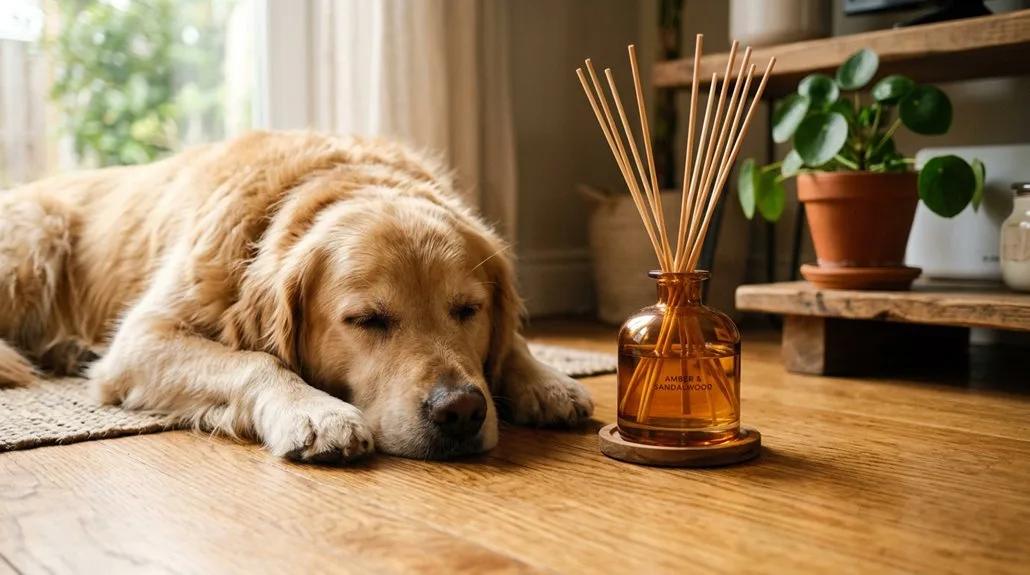
That air freshener making your home smell like a spring meadow? It could be quietly harming your pets. Commercial liquid formulae are loaded with VOCs and phthalates—chemicals tied to respiratory damage, neurological harm, and organ stress in animals. Birds react even faster than cats or dogs. The label won’t warn you, and the scent won’t betray it. Here’s what pet owners need to know before reaching for that bottle again.
Are Commercial Liquid Air Fresheners Safe for Pets?
Many pet owners use commercial liquid air fresheners without realising the hidden dangers these products pose to their animals. These products contain volatile organic compounds (VOCs) like formaldehyde and benzene. Prolonged exposure causes respiratory issues, skin irritation, and organ damage.
Commercial liquid air fresheners harbour hidden dangers — releasing toxic VOCs like formaldehyde and benzene that silently harm your pets.
Your pets experience scents far more intensely than you do. Overwhelming fragrances cause genuine distress for cats and dogs. Birds face the greatest risk due to extremely sensitive respiratory systems.
Cats lack liver enzymes needed to process certain toxins found in essential oils. Long-term exposure has been linked to increased feline asthma cases. Neurological problems, including tremors and unsteadiness, are also documented effects.
Understanding these risks helps you make safer choices for your household. Your animals depend entirely on your decisions. Natural alternatives such as baking soda and activated charcoal can absorb household odours without exposing your pets to harmful chemical compounds. When sourcing safer cleaning and hygiene products for commercial or agricultural environments, working with a trusted wholesale supplier ensures you have access to industrial-grade solutions that meet rigorous safety standards.
Toxic Ingredients in Liquid Air Fresheners to Avoid
When you use liquid air fresheners around your pets, you’re exposing them to a cocktail of harmful chemicals that can seriously damage their health.
These products contain toxic ingredients like VOCs, formaldehyde, phthalates, acetaldehyde, and benzene — many of which aren’t even listed on the label.
Your pets face greater toxicity risks than humans because they breathe closer to the ground, groom themselves by licking their fur, and can’t tell you when something’s making them sick.
Research found that five of six products tested emitted one or more carcinogenic hazardous air pollutants, for which the EPA recognises no safe level of exposure.
Common Harmful Chemicals
Liquid air fresheners contain several toxic chemicals that pose serious health risks to pets. You’ll want to know exactly what’s in these products before using them around your animals.
These are the most dangerous chemicals found in liquid air fresheners:
- Formaldehyde: A known carcinogen linked to leukaemia and upper airway cancers
- Phthalates: Endocrine disruptors detected in 75% of tested samples, with some products containing up to 7,300 ppm
- Benzene: A carcinogen with no safe exposure level per the EPA
- Acetaldehyde: A probable carcinogen found in 40% of products, exceeding 300 micrograms per cubic metre
- BHT: Promotes tumour growth and mimics oestrogen
Many of these chemicals aren’t listed on product labels, making informed purchasing decisions genuinely difficult for your household. Fragrance ingredients can be legally claimed as trade secrets, exempting manufacturers from disclosing them on product labels entirely.
Pet Toxicity Risks
These chemicals don’t just stay in the air — they interact directly with your pet’s body in ways that can cause serious harm.
VOCs absorb through your pet’s skin and respiratory system, then accumulate in their liver and kidneys.
Cats face especially serious risks. They lack the liver enzyme needed to break down essential oils and certain VOCs. Toxic buildup causes drooling, vomiting, tremors, and seizures.
Key toxicity risks include:
- Respiratory damage — VOCs worsen asthma and bronchitis in cats and dogs
- Neurological harm — exposure causes weakness, unsteadiness, and tremors
- Organ failure — liver and kidney damage from prolonged VOC exposure
- Cancer risk — some VOCs are known or suspected animal carcinogens
Every tested air freshener product emitted at least one toxic compound.
Pets can also be harmed through ingestion via grooming — licking chemicals off their coat or paws after contact with sprayed surfaces.
How Liquid Air Fresheners Affect Cats, Dogs, and Birds Differently
Not all pets react to liquid air fresheners in the same way, and grasping the differences can help you protect them. Cats lack a liver enzyme that metabolises essential oils, causing toxic build-up. This makes them especially vulnerable to neurological effects like tremors and seizures.
Dogs experience breathing difficulties from VOCs, particularly with pre-existing respiratory conditions. Essential oils like tea tree and citrus cause liver damage and gastrointestinal issues in dogs. Overpowering scents also trigger anxiety and behavioural changes.
Birds present a different concern. Their respiratory tracts are highly sensitive, making inhaled VOCs particularly dangerous. While bird-specific studies remain limited, VOCs generally irritate respiratory systems across species. Your bird faces breathing difficulties similar to pets with asthma from the same chemical exposure. Research found that 25 top-selling products collectively emitted 133 different VOCs, with every single product releasing at least one compound classified as toxic or hazardous.
Warning Signs Your Pet Is Reacting to Liquid Air Fresheners
Recognising the warning signs of a reaction early can protect your pet from serious harm. Watch your pet closely after using liquid air fresheners in your home.
| Warning Category | Common Signs |
|---|---|
| Respiratory | Coughing, sneezing, laboured breathing |
| Gastrointestinal | Vomiting, diarrhoea, drooling |
| Ocular & Nasal | Watery eyes, runny nose, tearing |
| Behavioural | Lethargy, hiding, anxiety |
| Skin & Allergic | Scratching, paw licking, dermatitis |
These signs appear within hours of freshener exposure. VOCs and phthalates are common chemical triggers. Your pet’s withdrawal from scented rooms is a clear distress signal. Don’t ignore repeated scratching or appetite loss. Acting quickly when you spot these signs leads to great results for your pet’s recovery.
What to Do When Your Pet Is Exposed?
When your pet shows signs of exposure to a liquid air freshener, act quickly and remove them from the affected area immediately.
Open windows and increase ventilation to reduce their continued inhalation of volatile organic compounds (VOCs), which are airborne chemicals that irritate the nose, throat, and lungs.
Monitor your pet closely for these symptoms:
- Coughing, sneezing, or difficulty breathing
- Vomiting, diarrhoea, or loss of appetite
- Tremors, weakness, or loss of coordination
Keep the product packaging available for ingredient identification. Your veterinarian needs this information to guide treatment decisions accurately.
Contact a veterinarian immediately if severe symptoms develop or persist beyond a few hours. Avoid feeding solid foods until professional guidance is received.
Early action produces great results for your pet’s recovery. For additional guidance on safe agricultural and household supplies in the KwaZulu-Natal region, IPSA-certified specialists can provide expert advice tailored to your specific needs.
Pet-Safe Air Fresheners That Protect Your Home and Your Pets
Many pet-safe air fresheners exist today, giving you effective odor control without putting your pets at risk. You’re not alone in wanting a fresh home that’s also safe for your animals.
Consider these trusted options:
- Azuna Pet: Uses Texas cedarwood oil, clinically proven to reduce airborne odors by up to 90%
- Pet Odor Exterminator and Pet House: Available through retailers like Chewy
- Febreze: Safe when dried for 10-20 minutes before pet exposure
You can also make homemade sprays using 1 cup distilled water with 10-15 drops of pet-safe oils like lavender or cedarwood. Always test small areas first.
Products backed by organizations like the AKC provide additional safety assurance.