That old 5L plastic bottle sitting in your garage isn’t the clever fuel-saving hack you think it is. The wrong container doesn’t just leak — it reacts chemically with petrol, builds explosive vapour, and can carry serious legal consequences. Safe fuel storage comes down to certifications and construction standards most people never think to check. What separates a dangerous gamble from a compliant solution might surprise you.
Can You Use Empty 5L Plastic Bottles for Petrol?
While it might seem convenient, using empty 5L plastic bottles for petrol storage isn’t safe or legal.
General-purpose plastic containers can react chemically with petrol, weakening their structural integrity over time.
Most household 5L bottles aren’t made from HDPE (high-density polyethylene), the material approved for fuel storage.
Lower-grade plastics crack and split more easily under fuel exposure.
This creates serious safety risks for you and those around you.
Regulations require only approved containers for flammable liquid storage.
These approved containers include specific features:
- Flash-arresting screens
- Spring-closing lids
- Proper venting systems
- Maximum fill lines for thermal expansion
Non-approved containers violate occupational safety standards.
Using unapproved bottles puts your community at risk and exposes you to legal consequences.
Always choose properly certified fuel containers. For safe and compliant liquid storage, sourcing containers from a reputable packaging supplier ensures you get materials that meet industry standards. Approved containers should be red-coloured and clearly labelled to indicate flammable contents and prevent accidental mixing with other liquids.
Why Most 5L Plastic Bottles Fail the Gasoline Test
Most 5L plastic bottles fail petrol containment because they’re made from untreated HDPE, a plastic that lacks the fuel-grade barrier required to prevent permeation. Petrol vapours escape through standard HDPE walls, creating serious fire hazards. You’re dealing with a material that simply wasn’t designed for flammable liquids.
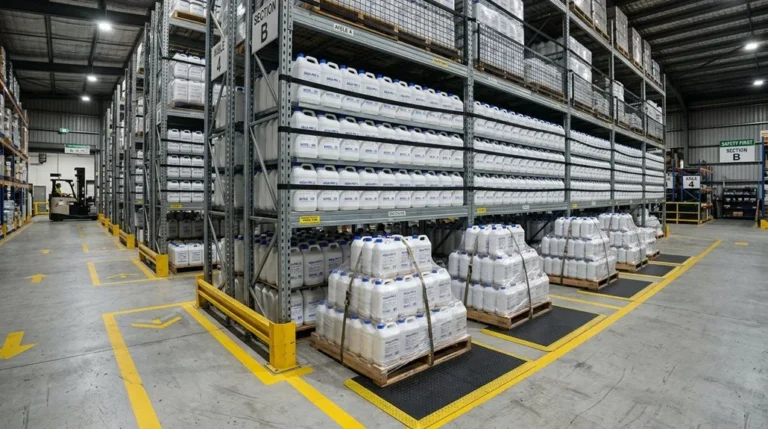
Untreated HDPE softens, swells, and degrades when exposed to petrol. E10 petrol worsens this problem because its ethanol content accelerates permeation and attracts moisture. Standard bottles also fail OSHA and NFPA compliance requirements entirely. The Bottle 5L HDPE Polyoak is rated at 100g wall construction, which is designed for general industrial use rather than flammable liquid storage.
Structural failure is a real risk. Non-rated plastics lack the required wall thickness for safe petrol containment. Without adequate airspace, expansion causes splitting. Over time, chemical degradation leads to leaks or sudden ruptures, putting you and everyone around you in danger. Fuel-grade containers undergo specialised surface treatment, commonly fluorination, which bonds fluorine atoms to the polyethylene surface to create a permanent barrier that untreated bottles simply cannot replicate.
The Safety Standards That Approve a Gas Container
Not every container qualifies as a gas container under the law. Specific safety standards determine what’s approved, and you need to know them.
OSHA requires containers to hold no more than 5 gallons for Category 2–4 flammable liquids. A nationally recognised testing laboratory (NRTL) must approve every container. Spring-closing lids and spout covers are mandatory on safety cans.
CPSC regulations require portable fuel containers to comply with ASTM F2517 under 16 CFR part 1460. Flame mitigation devices are required under 16 CFR part 1461. Manufacturers must also provide a General Certificate of Compliance.
Approved containers must meet these material standards:
- Puncture and degradation resistance
- Low petrol vapour permeability
- High chemical resistance
- Ignition resistance
- Durability against normal wear
Standard 5L plastic bottles meet none of these requirements. Approved gas cylinders and containers must also be secured using engineered noncombustible supports on noncombustible foundations when used in a stationary position. For expert guidance on compliant container selection and handling, IPSA-certified specialists can provide tailored advice suited to your agricultural or industrial needs.
The Real Risks of Using Unapproved 5L Bottles for Gas
Using a standard 5L plastic bottle to store or transport gas exposes you to serious, life-threatening dangers. Plastic lacks the structural integrity to contain pressurised gas. The walls degrade under pressure, leading to rupture or catastrophic failure.
Storing gas in a plastic bottle risks your life. Pressure destroys the walls, causing rupture and catastrophic failure.
Ruptured bottles don’t simply crack. Fragments propel outward at high velocity, creating hazards similar to explosive devices. A failed container can also act as a projectile, penetrating walls and nearby structures.
Heat makes things worse. Plastic develops leaks within approximately 2 minutes of fire exposure. Temperatures above 50°C (125°F) compromise the container entirely.
Escaped fuel vapour catches fire easily near sparks or open flames, causing flash explosions. These explosions burn nearby people severely. Your community deserves better protection than an unapproved bottle can ever provide.
Approved containers, such as industrial-grade packaging materials, are specifically engineered to withstand the demanding conditions of safe gas storage and transport. Improper storage in unapproved containers also exposes you to fines and penalties for failing to comply with established safety regulations governing gas storage.
How to Identify an Approved 5L Petrol Container
Knowing the dangers of unapproved containers makes the next step clear: you need to identify what an approved 5L petrol container actually looks like.
Approved containers carry specific markings and features that set them apart.
Look for these identifiers on any approved 5L petrol container:
- DOT marking printed directly on the container
- ASTM F2517 compliance label for petrol, paraffin, or diesel use
- Flame mitigation device (FMD) built into the spout or cap
- Child-resistant spout mandated by the Children’s Gasoline Burn Prevention Act
- Spring-closing lid with pressure relief and a flash-arresting screen
You’re part of a community that handles fuel responsibly. If you ever encounter issues accessing fuel safety resources online, the problem may stem from too much traffic or a configuration error blocking the server connection.
Choosing containers with these features keeps everyone safer and guarantees you’re meeting legal requirements.
Where and How to Store Your Gas Container Legally
Once you’ve got an approved 5L petrol container, storing it correctly is just as important as choosing the right one. The rules are clear, and following them keeps your household safe.
Never store petrol inside your home or basement. Vapours accumulate quickly in enclosed spaces, creating serious fire risks.
Petrol vapours build fast indoors. Keep containers outside — your home and basement are never safe storage options.
Store your container outdoors in a secure area, protected from tampering. Keep the storage spot free of weeds, rubbish, and combustible materials.
Follow these key storage rules:
- Store more than 25 gallons in an approved flammable liquids storage cabinet
- Keep containers away from underground entrances
- Post “No Smoking” signs near storage areas
- Make certain containers rest on firm, level ground
Your community deserves safe neighbours. Storing petrol correctly makes you one. For facilities that require precise inventory management of stored materials, a platform scale 150kg can help accurately track container weights and quantities on site.
What to Buy Instead: Approved 5L Petrol Containers That Meet the Standard
Storing petrol safely starts with having the right container in the first place. You don’t have to guess what works — approved options exist that meet strict standards.
Look for containers with these features:
- Spring-closing lid and spout cover for vapour containment
- UL or FM certification confirming independent safety testing
- 5-gallon (approximately 19L) maximum capacity, with 5L options available
- Flame-arresting screens (required for FM-certified cans)
- EPA certification to minimise fuel emissions and VOC permeation
Choosing a certified safety can means you’re doing it right alongside everyone who values safety.
These containers meet OSHA §1926.152(a)(1) requirements and ASTM standards. You get reliable spill prevention, pressure relief during fire exposure, and peace of mind knowing your container is built for the job. Pairing your approved petrol container with proper PPE and safety wear — such as chemical-resistant gloves and eye protection — adds another critical layer of protection when handling and transferring fuel.