Top Guide: How to Calculate Packaging Costs for Takeaways?
That quoted unit price? It's hiding fees that inflate your real packaging costs by 25%. Here's the full calculation method.
Most takeaway operators think they know what their packaging costs. They don’t. That quoted unit price on the supplier sheet? It’s quietly hiding setup fees, plate charges, and logistics costs that can inflate your real spend by 25% before a single box leaves the warehouse. Material choice and order volume complicate things further. There’s a precise calculation method that exposes every hidden cost — and once you see it, you’ll never look at a packaging quote the same way again.
What Goes Into Takeaway Packaging Costs?
Before you can control your packaging spend, you need to grasp what drives it. Several key factors determine what you’ll pay per unit.
Before you can control your packaging spend, you need to understand what’s driving it in the first place.
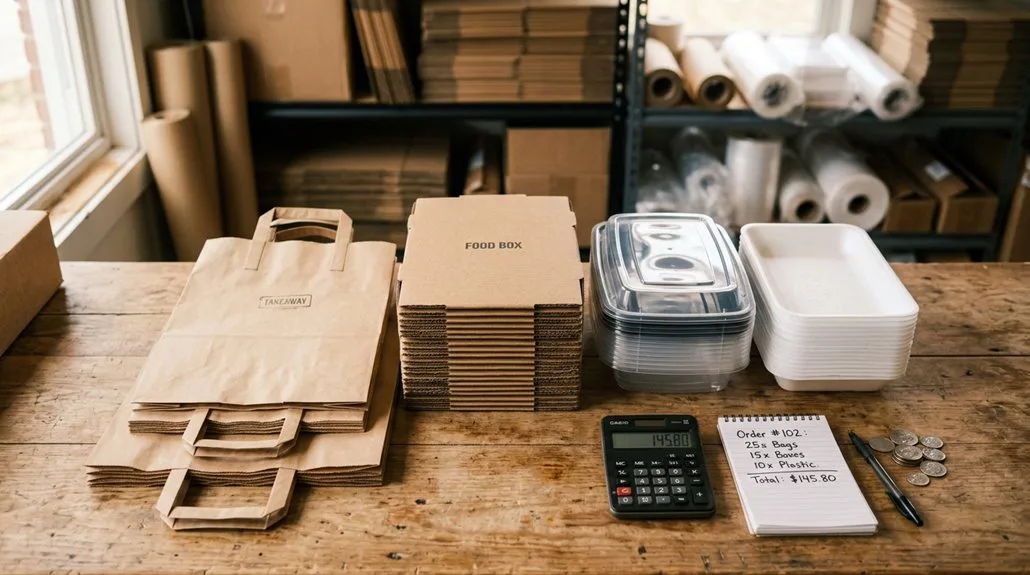
Material choice is the foundational cost driver. Single-use plastic containers start as low as $0.10 per unit, while glass and metal command premium prices due to heavy manufacturing and shipping costs.
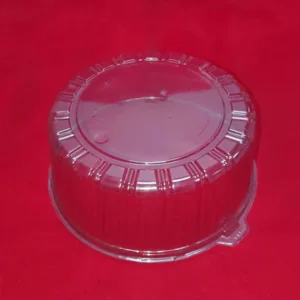
Order volume shapes your per-unit rate markedly. Small cafés buying without bulk discounts often pay around $0.50 per container, whereas larger orders open supplier discounts. Suppliers such as Cool Pack CC offer single wall cake boxes in packs of 100, making bulk purchasing accessible for smaller takeaway operations.
Customization adds cost. Basic kraft paper boxes run $0.02 to $0.05 per unit, but branded, printed versions require higher minimums and higher prices.
Certifications like food-safe or eco-labels also increase costs. Grasping these four drivers puts you in control of your total packaging budget. Bioplastics such as PLA and PHA carry higher price tags due to agricultural resource needs, smaller production scale, and developing composting infrastructure.
How to Calculate Your Per-Unit Takeaway Packaging Cost
Calculating your per-unit packaging cost starts with a simple formula: divide your total packaging spend by the number of units ordered. This gives you a baseline figure to work from.
However, your true per-unit cost includes more than just materials. Use this formula instead:
One-time fees include setup charges and design costs, which don’t change regardless of volume. When you factor these in, your real per-unit cost often runs 20–25% higher than the quoted price.
Here’s what typically adds up:
Artwork setup: From £300 per order
Plate fees: Around £400 for 4-colour setups
Freight: Varies per delivery
Larger orders distribute these fixed costs across more units, providing a great result for your bottom line. Suppliers specialising in fast-food and retail packaging often offer a broad range of eco-friendly bags, foil containers, and clear cups suited to takeaway operations. Volume discounts can further reduce your per-unit cost when purchasing packaging materials in large quantities.
Which Takeaway Packaging Costs Can You Actually Control?
Not every packaging cost is fixed — some you can actually control. Material selection, design choices, and supplier relationships are all within your reach.
You control more than you think:
Material choice — Switch from premium glass to economical paper or recyclable options to reduce spend.
Businesses that consolidate SKUs and optimise packaging size see great results in reduced storage and handling costs. Regulatory compliance for food safety and environmental standards can also introduce hidden costs that are worth accounting for early in your planning.
Your supplier matters too. Coolpack cc offers bulk supply with the scale to deliver lower per-unit costs, helping your business spend smarter every order. Suppliers with nearly three decades of industry experience bring valuable knowledge of local market conditions, helping you avoid costly sourcing mistakes.
How Much Does Order Volume Lower Your Cost Per Unit?
Order volume directly affects how much you pay per unit of packaging. When you order more, your supplier can batch your delivery with others, cutting last-mile costs considerably. That saving passes directly to you.
Bulk purchasing follows a simple logic: higher volumes mean lower per-unit prices. Platforms operating at scale achieve contribution margins around 3%, or roughly $1.20 per order, by stacking and routing efficiently.
Batched deliveries lower your last-mile delivery expenses
Consistent ordering frequency strengthens your negotiating position
Businesses ordering regularly belong to a group that’s already winning on cost. You’re not just buying packaging; you’re buying a pricing advantage that compounds over time. Suppliers with IPSA-certified specialists can guide you toward the right bulk order thresholds that unlock the best per-unit rates for your business. Global food delivery has more than tripled since 2017, meaning suppliers have scaled their operations to accommodate larger and more frequent bulk orders at better rates.
What to Look for in a Cost-Effective Takeaway Packaging Supplier
When choosing a takeaway packaging supplier, cost is only part of the equation. You also need reliability, quality, and flexibility. Look for suppliers offering bulk discounts with low minimum order quantities (MOQs). This keeps your upfront costs manageable.
Prioritise FDA-approved, food-safe materials. Your containers should handle hot foods, liquids, and freezer storage without failing. Leak-proof and microwaveable options protect your product and your reputation.
Food-safe materials aren’t optional. Your packaging must handle heat, liquids, and freezing without compromising your product or reputation.
Check for added value beyond pricing:
Free design support and customisation options
Same-day shipping and fast turnaround
Free samples before committing to bulk orders
Expert guidance on materials and printing
Coolpack cc delivers these advantages to businesses in Paulpietersburg and beyond. Partnering with a supplier like this is a great result for your bottom line. For example, Adams Clear Butcher Bags are available in multiple sizes and pack quantities, giving businesses the flexibility to order exactly what they need. Suppliers who offer free 2D-3D mockups allow you to visualise your packaging before committing to a full production run.