Best Advice: How to Store 5L Bottles Safely in Warehouses?
Most warehouses store 5L bottles wrong — and it's costing them far more than broken stock. Here's exactly what to fix.
Most warehouses are one bad pallet away from a six-figure liability claim — and they don’t even know it. Storing 5L bottles seems straightforward until broken stock, compliance fines, and injury reports start piling up. The problem isn’t carelessness. It’s that standard warehouse practices were never designed with high-volume liquid containers in mind. Before you stack another shipment, there’s something critical you need to know about where these operations consistently go wrong.
Why Poor 5L Bottle Storage Costs More Than Breakage
When bottles break, you replace them — that’s a one-time cost. But poor storage creates recurring expenses that compound every month. That’s what separates businesses that thrive from those that struggle.
Poor storage doesn’t just cost you once — it bleeds your budget every single month.
Consider these 2025 industry figures:
Bin storage costs rose 15% year-over-year, from $2.67 to $3.08 per bin monthly
Long-term storage fees now range 30–50% above standard monthly charges
Damaged bottles trigger $2.50–$3.00 per carton in reprocessing fees
Monthly pallet storage averages $20.17, multiplying when inventory moves slowly
Poorly stacked 5L bottles occupy more cubic footage than necessary. You pay for wasted space at $0.46 per cubic foot monthly. Inefficient organisation delays inventory turnover, pushing stock past the 90-day threshold where additional surcharges activate automatically. Peak-season surcharges can compound these storage inefficiencies further, as 3PL providers commonly apply additional fees during busy periods that stack on top of existing long-term storage penalties.
Warehouses that invest in proper industrial weighing equipment can also reduce product giveaway losses caused by inconsistent fill levels across 5L bottle batches.
How to Package and Rack 5L Bottles for Maximum Protection
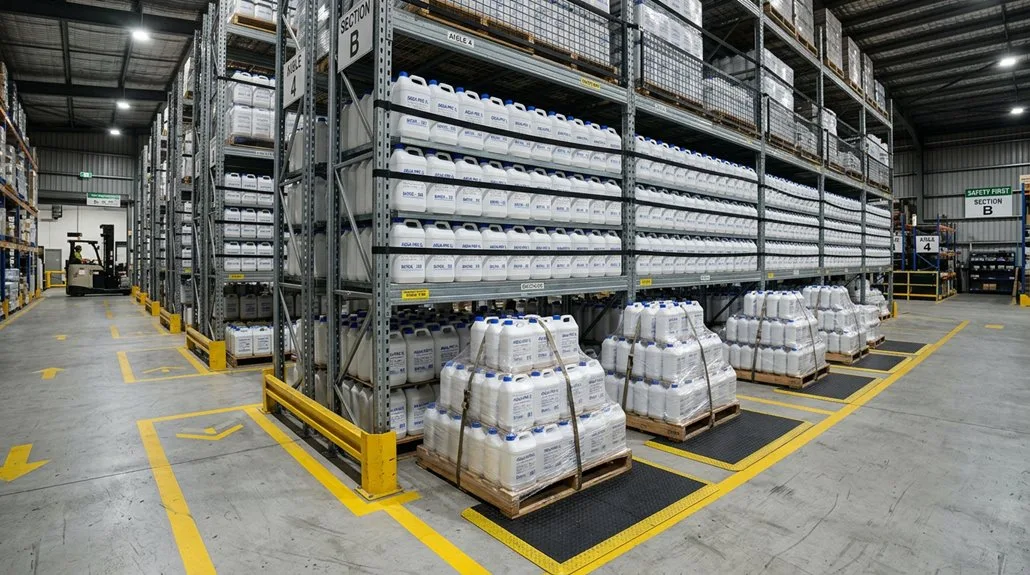
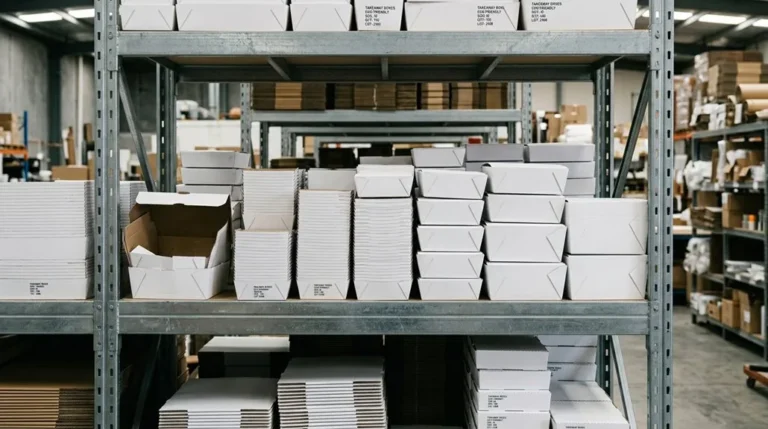
Cutting storage costs starts before bottles reach the shelf — it starts with how you package and rack them. Use stretch film to secure pallets and keep bottle necks within pallet limits. Add foam partitions or anti-collision pads between layers for shock absorption.
For racking, choose heavy-duty adjustable systems with weight capacity exceeding your load by 20%. Modular racks hold 8 bottles per shelf and stack up to 15 shelves, storing 120 bottles per unit. Install wire decking or dividers to prevent shifting. The Bottle Pet 5L Blue is available in packs of 49 units with a 38mm neck finish, making it easy to plan pallet and rack configurations accurately.
Smart packaging matters too:
Include moisture-absorbent packets in humid conditions
Leave bottles in original sealed cartons
Use standard 1.2×1.0m pallets for logistics compatibility
These combined methods protect your stock and deliver a great result for your bottom line. Always store water bottles in a cool, dry, dark place to prevent contamination and preserve water quality over time.
Stacking Rules That Prevent Crushing, Tipping, and Loss
Stacking 5L bottles incorrectly costs businesses money through crushed stock, tipped pallets, and avoidable losses. Your team needs clear rules to protect every unit.
Improper stacking of 5L bottles drains business revenue through damaged stock, unstable pallets, and preventable losses.
Follow these stacking standards:
Keep unsupported stacks within a 3:1 height-to-base ratio
Never stack loose bottles directly on top of each other
Use dividers or compartments between layers to prevent crushing
Place heavier cartons at the bottom, lighter ones on top
Use wedges or supports to stop stacks from spreading
Shrink-wrap or band completed pallets for added stability. Inspect pallets before loading, and stack only on level surfaces. Paint height limit markers on walls and posts so your staff always knows the safe maximum. Routinely check stacks for leaning or shifting. For bulk storage operations, sourcing the right packaging and agricultural supplies from a specialist supplier ensures you have access to appropriate dividers, wrapping materials, and protective components suited to your specific storage needs. Alternate stacking layers using cross-ties to distribute weight evenly and reduce the risk of shifting across the entire pallet load.
Temperature and Humidity Risks That Damage 5L Bottle Stock
Temperature does more damage to your 5L bottle stock than most warehouse managers expect. PET bottles begin leaching BPA at temperatures between 18°C and 28°C. At 28°C, migration levels reach 0.26 ng/L, raising long-term health risks for end users.
HDPE bottles face a different problem. Increased heat causes shrinkage and distortion, accelerating the container ageing process. Storage above 110°F compromises dimensional stability permanently. Suppliers with nearly three decades of industry experience recommend inspecting HDPE containers regularly for early signs of heat-related deformation.
Humidity creates its own risks. High moisture degrades cardboard cartons, promotes mould growth, and causes plastic surfaces to crack or bubble. Condensation from temperature fluctuations weakens secondary packaging further. BPA is also an endocrine-disrupting compound found across many everyday products, meaning cumulative daily exposure from multiple sources can exceed what any single storage condition suggests.
Your warehouse team can prevent these losses by:
Controlling storage temperatures below 18°C
Using stretch wrap on secondary packaging
Implementing calibrated sensors and deviation alarm systems
OSHA and NFPA Compliance Rules for Storing 5L Bottles
Compliance with OSHA and NFPA standards protects your stock, your staff, and your business from serious legal and financial risk. You’re part of a community of responsible operators who take these rules seriously.
Key rules to follow:
Store no more than 25 gallons of Category 1, 2, or 3 flammable liquids outside an approved cabinet
Use OSHA-approved containers rated by DOT or NRTL
Keep aisles at least 3 feet wide for safe access
Label all containers with the chemical name, hazard category, and handling precautions
Post “Flammable – Keep Fire Away” signs in storage areas
A single approved cabinet holds up to 60 gallons of Category 1–3 flammables. You can’t stack containers over 30 gallons on top of each other. For warehouses that also manage industrial cleaning chemicals, sourcing from a reputable supplier ensures that safety data sheets and proper labelling are included with every delivery. If your storage system experiences a configuration error, access to critical safety documentation may be temporarily blocked, so always keep physical copies of compliance records on site.