Top Secrets: How to Store Bulk Toilet Paper in Damp Spaces?
Humidity above 60% destroys toilet paper in days. Here's what actually keeps bulk rolls safe in the dampest spaces.
Everyone says bulk toilet paper and damp spaces don’t mix — they’re wrong. Humidity above 60% can destroy entire stockpiles within days, yet simple, affordable techniques exist that genuinely protect every roll. The real enemy isn’t moisture itself; it’s not knowing how to fight it. These methods work even in the most stubbornly wet environments.
Stop Moisture From Ruining Your Bulk Toilet Paper
Moisture is one of the biggest threats to bulk toilet paper storage, and it acts fast. It weakens the paper, causes curling, and promotes mould growth. You can’t afford to let dampness compromise your stock.
Moisture acts fast — weakening paper, causing curling, and promoting mould that can devastate your entire bulk supply.
Start by keeping original sealed plastic packaging intact. It acts as a vapour barrier against humidity. If you’ve already opened a roll, seal it promptly with wrapping film or a plastic bag.
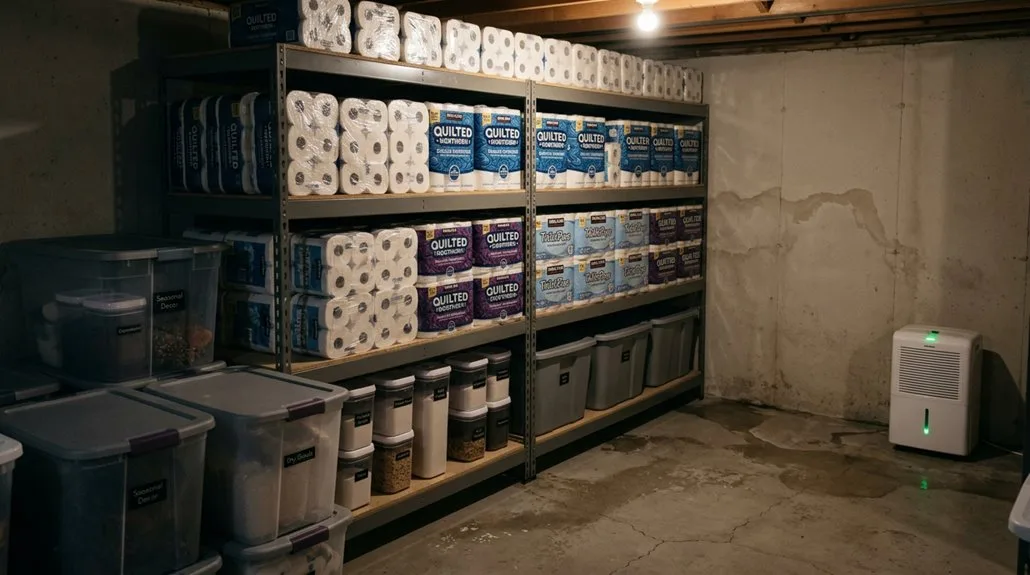
Use a hygrometer to monitor your storage area’s ambient humidity. If levels rise too high, a dehumidifier gives you great results in controlling excess moisture. You’ll also want to:
Raise rolls off the ground using pallets
Maintain good airflow around stored rolls
Replace worn moisture absorbers regularly
These steps protect your investment and keep your supply fresh. When purchasing in bulk, opting for products like 2-ply wrapped toilet paper can offer an added layer of protection against moisture compared to unwrapped variants. Always choose a dry, ventilated room or warehouse protected from direct sunlight and rainwater intrusion as your primary storage location.
Choose the Right Room Before You Store a Single Roll
Protecting your stock from moisture only works if you’ve picked the right room in the first place. Each storage space carries different risks. Your choice directly affects product quality.
Room
Moisture Risk
Best Practice
Linen Closet
Low
Bathroom-adjacent shelving
Bulk Closet
Low
Assign dedicated shelves
Under-Bed
Moderate
Raise off floor
Garage
High
Use raised cabinets
Utility Room
Moderate
Rust-resistant shelving
Garages expose bulk supplies to precipitation and dust. Raised shelves prevent ground moisture damage. Linen closets remain the most reliable option for daily-access rolls.
Under-bed storage suits long-term overflow effectively. Utility rooms with adjustable metal shelves support heavy bulk loads. You’ll protect every roll when you match the right room to the right quantity.
Basements and attics carry the highest environmental risks but remain viable when you use weatherproof containers and elevated shelving to shield rolls from dampness and flooding. For added protection in high-risk rooms, wrapping bulk rolls in heavy duty foil creates an extra barrier against persistent humidity and airborne moisture.
Which Containers Actually Keep Bulk Rolls Dry
The right container does most of the heavy lifting regarding keeping bulk rolls dry. You’ll want to match your container type to your specific damp space.
Each option below serves a clear purpose:
Waterproof totes: Clear bins with secure closures block moisture in basements and garages.
Vacuum-sealed bags: Airtight compression protects bulk rolls during long-term storage.
Stackable bins: Waterproof lids and vertical designs maximise space in humid areas.
Wall-mounted containers: High-capacity, punch-free boxes keep rolls off damp floors.
Under-sink organisers: Rust-resistant, expandable shelving handles condensation near taps.
Coolpack cc supplies durable, moisture-resistant packaging solutions suited for businesses managing bulk stock. Choosing the right container means your rolls stay dry, usable, and ready when your team needs them. Businesses across Northern KwaZulu-Natal and Mpumalanga rely on nationwide bulk delivery to keep storage supplies consistently stocked without delays. Adding desiccants inside sealed bags helps control internal humidity and prevents warping, mildew, or mould from developing over time.
Seal Every Roll Before Damp Air Gets In
Damp air moves fast, and an unsealed roll absorbs humidity within hours of exposure. You’ll want to seal every roll immediately after unpacking. Wrapping film applied tightly leaves no gaps for vapour entry.
Unsealed rolls absorb humidity fast. Seal every roll immediately after unpacking — wrapping film leaves no gaps for vapour.
Use these sealing methods for bulk storage:
Wrapping film seals partial rolls after unpacking
Vacuum-sealed bags compress rolls and block humidity, dust, and pests
Airtight containers or bags protect individual rolls in damp basements
Moisture-proof plastic film wraps rolls before transport or storage
Add desiccants inside vacuum-sealed bags to absorb residual moisture. This combination delivers a great result in humid spaces like basements or under-sink areas. For heavy-duty protection, bubble wrap packaging can provide an additional cushioning layer that also shields rolls from moisture during long-term storage.
Keep original packaging on unused rolls, and check your seals regularly. Once moisture reaches a roll, it cannot be fully restored to its original usable condition, making prevention the priority. Your bulk supply stays dry, usable, and protected.
Rotate Stock and Monitor Storage to Prevent Mould
Mould grows quickly once moisture reaches your stored toilet paper, so you’ll need a structured routine to stay ahead of it. Use the first-in, first-out method by placing older stock at the front of your storage area. This guarantees older rolls get used before newer ones, reducing long-term moisture exposure.
Check your storage space weekly using a hygrometer to monitor humidity levels. Document your readings and note any moisture incidents you observe. Remove rolls showing early mould discoloration immediately. For specialised guidance on bulk storage solutions, IPSA-certified specialists can provide expert advice tailored to your specific packaging and storage needs.
Businesses that maintain consistent inspection schedules see great results in preserving stock quality. Mark bulk containers with storage dates to track inventory age accurately. When moisture appears in one area, transfer remaining stock to a protected space and address the source directly. Damp or mildewed rolls become unusable and must be discarded, so moving compromised stock out of your storage area promptly prevents mildew from spreading to the rest of your supply.