Power Tools & Hardware
Key Facts: Why Choose an Ingco Digital Multimeter for DIY?
Most DIYers grab any multimeter. Ingco’s CAT III/IV-rated meters handle 1000V — and that’s only the beginning.
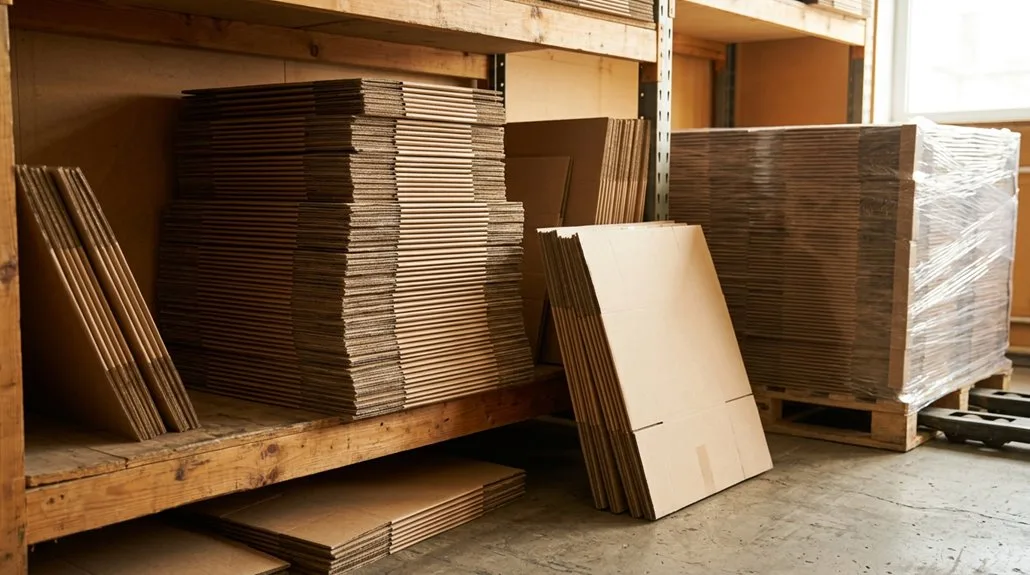
Buying bulk boxes without understanding pricing layers is quietly draining your budget. Orders of 500+ units can slash costs by up to 63% — but only if you know exactly where the savings hide. Freight consolidation, DIM weight optimisation, and tiered discount thresholds don’t work in isolation; they stack. Most buyers never leverage all three simultaneously. The difference between a smart bulk purchase and an expensive one often comes down to a few overlooked details.
When you buy boxes in bulk, the price per unit drops — and there’s a clear economic reason for this. Manufacturers spread fixed setup costs across larger quantities, reducing overhead per box. Higher volumes also allow suppliers to negotiate better raw material rates.
Tiered pricing structures reward you with progressively lower per-unit costs as your order size increases. Bulk orders can reduce per-unit costs by 30–50% through these structures. You’re part of a community of smart buyers who grasp this system.
Threshold pricing applies discounts once your order hits a specified quantity. Fewer shipments mean lower transportation costs per unit. These savings combine to make bulk buying the most cost-effective approach for your business. Suppliers like Cool Pack CC offer packaging solutions where buying in packs of 100 units delivers meaningful savings over smaller quantities. Unlike all-units pricing, threshold pricing applies the discount only to units beyond the minimum purchase quantity, preserving your supplier’s base pricing on initial units.
Before you spend a penny on bulk boxes, you need to measure your products precisely — length, width, and height.
The right-sized box matches your product closely, reducing wasted space and eliminating unnecessary filler materials like bubble wrap.
Oversized boxes trigger dimensional (DIM) weight pricing, where carriers charge based on box size rather than actual weight, and that difference can cost you substantially more per shipment.
Sourcing from a bulk packaging supplier with nearly three decades of industry experience can also help you access unbeatable wholesale pricing that keeps per-unit costs as low as possible.
Software and fulfilment services can automate packaging decisions, automatically selecting the right box size for each order to eliminate guesswork and reduce material waste.
Getting the right box size is the first step to cutting packaging costs. Measure each dimension carefully before placing any bulk order. Use a ruler or measuring tape on a flat surface for accuracy.
Always measure from the inside of the box. The packaging industry uses internal dimensions as standard. Record your measurements as Length × Width × Height.
Keep these rules in mind:
Accurate sizing also reduces your shipping costs. Carriers calculate billing weight using a DIM formula: Length × Width × Height ÷ DIM factor. Smaller, well-fitted boxes produce a lower DIM weight, which means lower fees for you. Common DIM divisors used by carriers are 139 for inches and 5000 for centimetres, though this can vary by carrier.
For example, speciality packaging like egg trays and topdecks comes in standardised unit counts such as 150 or 450 per order, which means choosing the correct size upfront prevents costly returns or reorders.
The right box size saves you money before you spend a single rand. Matching your product to the correct box reduces wasted space and lowers shipping costs. You’re paying for air when you oversize.
Use these standard matches:
Interior measurements are the industry standard for product fit. Always use L x W x H format when ordering.
A 12x9x6 box holds 648 cubic inches, fitting shoeboxes and small appliances comfortably. Getting this right delivers a great result for your bulk budget. For food and meat packaging specifically, butcher bag sizing follows similar dimensional logic, with options ranging from compact 15x25cm to large 60x90cm formats depending on product volume. Carriers like UPS and FedEx calculate dimensional weight charges by dividing the box’s cubic size in inches by 139, billing whichever is higher between that figure and the actual weight.
Matching your box to your product is only half the equation — you also need to avoid going bigger than necessary. Oversized boxes trigger dimensional (DIM) weight charges from carriers like UPS, FedEx, and USPS. That means you pay for space, not just weight.
Here’s how DIM weight works: divide length × width × height by 139 (UPS/FedEx) or 166 (USPS). If that number exceeds your actual weight by over 50%, switch to a smaller box.
Watch these oversized cost triggers:
Choosing the right size keeps your shipping costs predictable and your business running efficiently. For agricultural and industrial shippers, suppliers like Cool Pack cc offer woven polypropylene bags in multiple weight capacities — including 10kg, 25kg, and 50kg options — making it easier to match packaging to actual product weight without paying for unused space. For example, shipping 100 packages daily with just $5 in unnecessary oversized charges adds up to over $127,500 annually — a hidden cost that right-sizing your boxes can eliminate entirely.
Bulk box volume deals can slash your packaging costs by 45–63% when you hit the right order thresholds. Suppliers like Coolpack cc structure pricing across volume brackets, rewarding larger commitments with steeper discounts.
Bulk box volume deals can cut your packaging costs dramatically — if you know the right order thresholds to hit.
Here’s how all-units pricing works for your business:
Once you cross the threshold, the reduced rate applies to your entire order, not just the extra units. That’s a great result for businesses buying consistently.
Coolpack cc also offers contractual and seasonal discounts, letting you negotiate rates based on order size and commitment. Locking in volume agreements with a trusted local supplier gives your business predictable costs and real savings every order cycle. For example, bulk options like the Adams Clear Butcher Bag are available in packs of 100 to 200 units, giving businesses flexible entry points into volume purchasing.
Tiered bulk pricing sets different price-per-unit rates depending on how much you order. Small orders carry a standard rate, mid-size orders get a discounted rate, and bulk orders open up the lowest rate.
For example, boxes may cost R50 each for 1–10 units, R45 each for 11–50, and R40 each for 51 or more.
Knowing when to order makes a great result even better. Order when you’re close to the next tier threshold. That one push saves you more per unit across your entire purchase.
Coolpack cc structures pricing this way so businesses like yours benefit from growing volume:
Order more, save more. It’s that straightforward. For personalised guidance on reaching the right tier for your needs, IPSA-certified specialists at Cool Pack CC are available to help you plan your order strategically.
When you compare kraft, white, and multi-depth boxes by per-unit cost, the savings difference between options can be significant.
Lavex 24″ x 18″ x 18″ multi-depth boxes deliver one of the strongest per-unit values at $5.10, while standard Partners Brand 16″ x 16″ x 16″ multi-depth boxes run $8.35 per unit.
Knowing which box type fits your volume and product needs lets you lock in the lowest possible cost per shipment. For operations that also require fast food packaging supplies, brown paper bags such as the SO6 size are available in packs of 500 at R222,50 inclusive of VAT, offering a practical bulk-buy option alongside your box purchases.
Comparing per-unit costs across kraft, white, and multi-depth boxes reveals clear savings patterns worth knowing before you place your next bulk order.
White boxes offer the lowest entry point, with small units dropping to $0.31 each at 1,800 quantity. That’s a 24% reduction from the 25-bundle rate of $0.41.
Kraft multi-depth boxes cost more per unit. The 24x18x18″ Lavex kraft runs $5.10 each, while the 16x16x16″ Partners Brand reaches $8.35 per unit.
Multi-depth RSC boxes in bulk start at $4.94 each, making them a great result for businesses needing flexible sizing without overspending.
Here’s a quick breakdown:
For added protection during shipping, bubble wrap 1200mm is available at R310.00 incl. VAT and pairs well with bulk box orders to reduce product damage in transit.
Not all box types deliver the same per-unit savings at bulk volumes, so knowing which category cuts costs the most can sharpen your purchasing decisions.
Kraft boxes offer mid-range savings, with ValuePack Direct pricing at $0.95–$2.10 per unit for 500+ orders.
White boxes deliver the steepest discounts. Basic folding cartons drop to $0.40–$1.20 per unit, and standard corrugated White boxes from Uline cost as little as 43¢ per unit.
Multi-depth boxes rank competitively, with The Boxery dropping below 70¢ per unit at 500+ orders.
Here’s how the types compare at bulk volume:
White boxes consistently win on per-unit savings at high volumes.
Across the wholesale packaging market, bulk box pricing combined with local pickup delivers a measurable cost advantage that competitors struggle to match.
Bulk box pricing paired with local pickup creates a cost advantage your competitors simply cannot replicate.
You avoid freight fees, port handling charges, and warehousing costs entirely. That’s a great result for your bottom line.
Local pickup also protects you from the 15–35% price increases that 2026 tariffs on shipping containers create.
Inland suppliers adjust slower to these hikes, giving you access to pre-tariff inventory when you collect directly.
Volume pricing strengthens your position further:
Joining a local bulk network means you’re not absorbing 40% year-on-year shipping cost surges that pressure competitors and smaller buyers alike. Suppliers with nearly three decades of industry experience, like those serving Northern KwaZulu-Natal and Mpumalanga, have established wholesale pricing structures that consistently outpace what distant distributors can offer.
Locking in volume pricing is only worthwhile if your order process matches the price tier you’re targeting. Start by forecasting your demand, then calculate your break-even point using the price difference per box multiplied by your order quantity.
Follow these three steps to place smartly:
Coolpack cc makes this process straightforward for businesses in Paulpietersburg and beyond. You get volume pricing without unnecessary complexity.
That’s a great result for any operation looking to reduce packaging costs consistently.
Most DIYers grab any multimeter. Ingco’s CAT III/IV-rated meters handle 1000V — and that’s only the beginning.
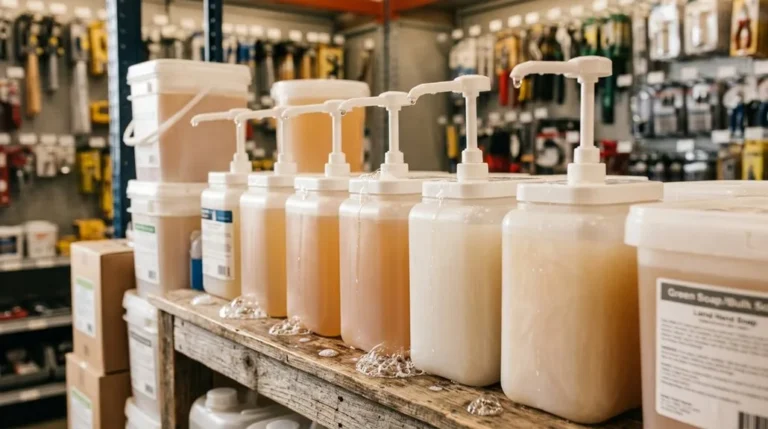
Most buyers grab the cheapest bulk hand soap and pay for it later. Here’s what separates a smart purchase from a costly mistake.
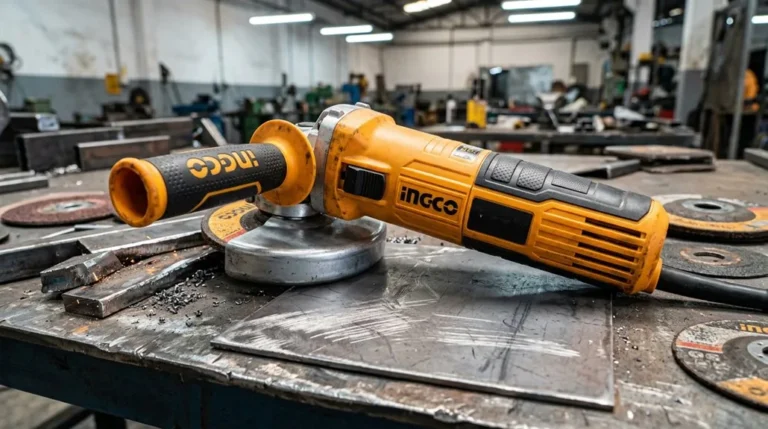
Wrong disc size costs you time and money. The gap between Ingco’s AG130018 and AG24008 determines everything about your metal cuts.

Most impact wrenches destroy lug nuts. Your Ingco might be different—but only if you match the specs precisely.