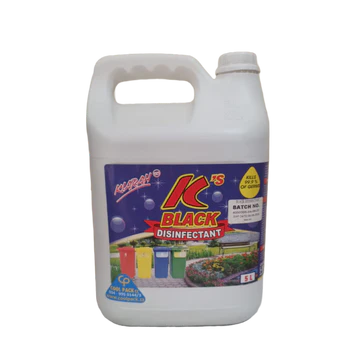
Ask any South African gran what she uses on the dog kennel, the bins or that drain behind the kitchen that smells like a crime scene, and there is a good chance the answer is a dark, tarry liquid that turns milky white the moment it hits water. That is Jeyes Fluid, and it has been fighting germs in backyards since 1877.
It is also one of the most misunderstood cleaning products on the shelf. People use it indoors (don’t), mix it with bleach (really don’t) and splash it around cat litter areas (please, never). This guide fixes all of that. You will learn what Jeyes Fluid actually is, what it is brilliant at, the exact dilution for every job, how to stay safe, and how to pay less per litre.
The 30-second version
- Jeyes Fluid is a concentrated outdoor disinfectant made from tar acids (a family of phenolic compounds).
- Use it on drains, bins, paving, kennels, stables, chicken coops and greenhouses. Not inside the house.
- Most jobs need 1 part Jeyes to 9 parts water for disinfecting, or 1 to 19 for general cleaning. Outdoor drains can take it neat.
- Keep it well away from cats and fish, and never mix it with bleach or other chemicals.
- The 25L drum is the cheapest way to buy it per litre.
Jump to: What it is · Uses · Dilution chart · Step by step · Safety · Price and sizes · Myths · FAQ
What Is Jeyes Fluid, Exactly?
Jeyes Fluid is a concentrated disinfectant based on tar acids, a group of phenolic compounds (cresols and xylenols) that come from coal tar. If that sounds old-school, it is. John Jeyes patented the formula in Victorian England, and the same basic chemistry has been killing bacteria, fungi, algae and mould for well over a century.
Phenolic disinfectants work by attacking the proteins inside germs and breaking down their cell walls. The MSD Veterinary Manual describes phenols as “general protoplasmic poisons”, which is a fancy way of saying they are tough on almost every type of microbe. That is exactly why farmers love it, and exactly why you need to treat it with respect.
Why does it turn milky white?
This is the party trick everyone notices. Jeyes Fluid contains emulsifiers. When the concentrate meets water, millions of tiny oil droplets spread out and scatter light, so the brown liquid instantly turns cloudy and white. It is a handy visual check too: if your mix is properly white, the concentrate has dispersed evenly through the water.
Is SABS Jeyes Fluid different?
In South Africa you will often see “SABS approved” on the label. That means the product has been tested against a South African Bureau of Standards specification for disinfectant performance. Our Jeyes Fluid SABS 5L carries that approval. Local labels can differ slightly from overseas ones, so the golden rule in this whole article is simple: the label on your container always wins.
What Is Jeyes Fluid Used For? 9 Jobs It Does Brilliantly
The official line from the manufacturer is clear: according to the Jeyes Fluid FAQ, it is designed for outdoor use only. Within that outdoor world, though, it is a genuine all-rounder.
- Outdoor drains and gullies. Kills odour-causing bacteria and clears slime. This is its most famous job, and we cover it in detail in our guide on how to dilute Jeyes Fluid safely for drains.
- Wheelie bins and refuse areas. Summer bin smell in Durban humidity is no joke. A rinse with diluted Jeyes knocks it right back. Pair it with strong heavy-duty 35 micron refuse bags so leaks never reach the bin in the first place.
- Paving, patios and driveways. It lifts green algae, black mould and that slippery film on shaded paving.
- Dog kennels and runs. Great for concrete runs and kennel floors, as long as the dog stays out until everything is bone dry.
- Chicken coops and pigeon lofts. Poultry keepers use it between batches to clean down hard surfaces.
- Stables, pig pens and calf pens. The 25L drum is a farm staple for exactly this reason.
- Greenhouses, seed trays and plant pots. Clean them twice a year to stop fungal diseases carrying over to the next crop.
- Garden tools. Dip secateurs and pruning saws between plants to avoid spreading disease.
- Outdoor bin stores at shops, schools and complexes. Cleaning staff use it on the outside areas while indoor surfaces get gentler products.
Did you know? Back in the 1800s, long before modern antibiotics existed, Jeyes Fluid was even used in medical treatments. Today it has retired from medicine and lives happily in the garden shed, which is exactly where it belongs.
What Jeyes Fluid is NOT for
Kitchen counters, bathroom tiles, toilets inside the house, wooden floors, children’s toys, food-prep areas and anything near a fish pond. For indoor floors, a pine gel is the more sensible choice (just read whether pine gel is safe for real wood floors first). For general indoor cleaning, our breakdown of the best multipurpose cleaner will point you in the right direction.
Jeyes Fluid Dilution Chart (Measured for a Normal Bucket)
Here is where most people go wrong. More is not better. Too strong and you waste money, stain surfaces and create fumes. Too weak and you are just washing with smelly water. The typical rates printed on Jeyes Fluid labels look like this:
| Job | Ratio (Jeyes : water) | In a 5 litre bucket | Contact time |
|---|---|---|---|
| Deodorise outdoor drains | Neat (undiluted) | Pour straight in, about 100–250 ml | Leave a few minutes, then flush |
| Disinfect bins, kennels, coops, stables | 1 : 9 | 500 ml Jeyes + 4.5 L water | About 30 minutes, then rinse |
| General cleaning of paving, pots, tools, greenhouses | 1 : 19 | 250 ml Jeyes + 4.75 L water | About 30 minutes, scrub, rinse |
| Heavy algae and moss on paths | 1 : 1 | 2.5 L Jeyes + 2.5 L water | About 30 minutes, scrub, rinse |
Quick maths tip: a standard 2-litre cooldrink bottle is perfect for small batches. For a 1:9 mix, add 200 ml Jeyes and fill to 2 litres with water. Label it clearly in permanent marker, though. More on why in the safety section.
Notice that “neat” is only for outdoor drains. Everywhere else, you dilute. If you only remember one row from this table, make it the 1:9 disinfecting rate.
How to Use Jeyes Fluid: Step by Step
For outdoor drains
- Put on gloves and eye protection.
- Lift the grate and scoop out leaves and gunk first. Disinfectant cannot kill what is buried under sludge.
- Pour Jeyes Fluid neat into the drain.
- Wait a few minutes, then flush thoroughly with a hosepipe.
- Repeat weekly in summer, or monthly when things are quieter.
For kennels, coops and stables
- Remove everything: animals, bedding, food and water bowls.
- Sweep out loose dirt and droppings. Organic matter weakens any disinfectant.
- Mix at 1:9 in a bucket or garden sprayer.
- Apply to floors and walls, and scrub with a stiff brush.
- Leave for about 30 minutes.
- Rinse well with clean water.
- Let everything dry completely with good ventilation before animals and fresh bedding go back in.
For paving and patios
- Sweep the area clean.
- Test your mix on a small, hidden spot first (some natural stone can mark).
- Apply at 1:19 for general grime, or stronger for heavy algae.
- Leave for about 30 minutes, scrub with a yard broom and rinse.
- Keep the run-off away from flowerbeds, ponds and stormwater drains that lead to streams.
Pro tip for greasy areas: Jeyes is a disinfectant, not a degreaser. Around braai areas, workshop floors or restaurant bin yards, cut the grease first with a heavy-duty degreaser, rinse, and only then disinfect. You will use far less Jeyes and get a much better result.
Jeyes Fluid Safety: The Rules That Actually Matter
Jeyes Fluid is safe when you use it properly, but it is a strong chemical. Overseas labels carry hazard statements such as “may be corrosive to metals” and “causes skin irritation”. Here is how to stay out of trouble.
1. Protect your skin and eyes
Wear rubber or PVC gloves and safety glasses every time, even for “just a quick drain”. Splashes happen. You will find gloves, goggles and more in our PPE and safety wear range. If you work with it all day, a gritty hand cleaner at the tap afterwards is worth its weight in gold.
2. Never mix it with anything except water
This is the big one. Do not combine Jeyes Fluid with bleach, drain openers, acids or other cleaners. Mixing chemicals can trigger reactions and toxic gases. The Washington State Department of Health warns that bleach in particular reacts with ammonia, acids and drain cleaners. If you want to use both, clean with one, rinse thoroughly, and only then use the other.
Cat owners, read this twice
Cats lack a liver enzyme (UDP-glucuronosyl transferase) that other animals use to break down phenols. That makes phenol- and cresol-based disinfectants like Jeyes Fluid especially dangerous to cats, as the Merck Veterinary Manual explains. Do not use it in cat areas, on cat bedding, or anywhere a cat can walk through it and lick its paws. Keep it away from fish ponds and water features too.
3. Keep animals out until it is dry
Dogs, horses, poultry and livestock can go back into treated areas only once everything is rinsed and completely dry. Wet surfaces are the risk. For more on keeping pets safe around cleaning products, see our article on whether liquid air fresheners are safe for pets.
4. Store it properly
- Keep it in the original container with the label on. Never decant into cooldrink bottles that a child could mistake for juice. (If you mix a batch in a bottle as suggested above, label it and use it the same day.)
- Store it locked away, out of reach of children, and protected from frost.
- Keep drums upright on a low shelf or the floor, never above head height. Our guide to storing 5L bottles safely in a warehouse applies to chemicals too.
5. Know what to do in an emergency
If someone swallows Jeyes Fluid or gets it in their eyes, call the South African Poisons Information Helpline on 0861 555 777. It is a free 24-hour service run by the Tygerberg Poison Information Centre and the Red Cross Children’s Hospital. Save it in your phone now. For eyes, rinse with plenty of clean running water for at least 15 minutes. Do not make anyone vomit. Have the container with you when you call.
Jeyes Fluid Price and Sizes: 5L vs 25L
“Jeyes Fluid price” is one of the most searched questions about this product in South Africa, so let’s do the sums properly. At the time of writing (November 2026), these are our prices:
| Size | Price | Cost per litre | Makes at 1:9 (disinfecting) | Best for |
|---|---|---|---|---|
| Jeyes Fluid SABS 5L | R160 | R32.00 | About 50 litres of mix | Homes, small gardens, one or two dogs |
| Jeyes Fluid 25L drum | R740 | R29.60 | About 250 litres of mix | Farms, kennels, complexes, schools, cleaning companies |
Buying five 5L bottles would cost R800. One 25L drum costs R740, so you save R60 and have less plastic to throw away. Because every litre of concentrate turns into about 10 litres of disinfectant at 1:9, a single 25L drum stretches a very long way. That is why the drum is the go-to for farms and businesses.
Running a business that goes through cleaning stock every month? Our guide to the bulk cleaning supplies a new office needs and the article on the benefits of buying pine gel in bulk show how bulk buying lowers your cost per clean.
Jeyes Fluid vs Bleach vs Pine Gel: Which One When?
These three get lumped together, but they do different jobs.
- Jeyes Fluid is the outdoor heavyweight. Drains, bins, animal housing, paving. Strong smell, long history, not for inside.
- Bleach (3.5% liquid) is the indoor disinfectant for toilets, sinks and hard surfaces, used diluted and never mixed with other cleaners. Need volume? There is a 25L bleach too.
- Pine gel is the everyday floor cleaner. Pleasant smell, gentle enough for indoor floors, but it does not have the same disinfecting punch.
For washrooms in shops, schools and offices, the right order of operations matters more than the product. Our step-by-step guide on how to sanitise public washrooms correctly walks you through it. Browse the full cleaning chemicals range to see everything side by side.
Jeyes Fluid Myths: True or False?
“Stronger is better.” False. Over-strength mixes waste money, can mark surfaces and make fumes worse. Follow the ratio.
“It’s fine indoors if you open a window.” False. The manufacturer says outdoor use only. Indoors there are better, safer products.
“It unblocks drains.” Partly true. It deodorises and disinfects, and it can help loosen slime. A solid blockage (roots, fat, a lost toy) still needs a plunger, a drain rod or a plumber.
“It keeps snakes away.” Unproven. This is a popular piece of backyard folklore in South Africa, but there is no good evidence for it. Keep your garden tidy and call a snake catcher instead.
“It’s safe for all pets once diluted.” False. Dilution helps, but cats are particularly sensitive to phenols at any strength. Keep cats away entirely.
Jeyes Fluid FAQ
What does Jeyes Fluid do?
It disinfects and deodorises outdoor surfaces. It kills bacteria, fungi, mould and algae on drains, bins, paving, animal housing and greenhouses, and leaves its well-known tarry smell behind.
Can I use Jeyes Fluid in the toilet?
No. Inside the house, use a bleach-based or dedicated toilet cleaner instead. Jeyes Fluid is meant for outdoor use.
Can you pour Jeyes Fluid down an outside drain neat?
Yes. Outdoor drains are the one job where labels allow it neat. Pour it in, wait a few minutes and flush well with water.
Is Jeyes Fluid safe for dogs?
Only once the area is rinsed and completely dry. Keep dogs out while you clean and until everything has dried. Cats are a different story: avoid it in any area a cat uses.
Does Jeyes Fluid kill weeds or grass?
It can scorch plants, so keep it off lawns and flowerbeds. It is not a weedkiller and should not be used as one.
How long does Jeyes Fluid last once mixed?
Mix only what you need for the day. The concentrate keeps well in its sealed original container, stored away from frost.
Where can I buy Jeyes Fluid in South Africa?
Right here. Coolpack stocks the SABS-approved 5L and the 25L drum, with delivery across South Africa from our base in Paulpietersburg, KwaZulu-Natal.
The Bottom Line
Jeyes Fluid has lasted almost 150 years for a reason: used outdoors, at the right dilution, it is one of the most effective and economical disinfectants you can buy. Respect the label, keep it away from cats, never mix it with other chemicals, and buy the drum if you use a lot.
Ready to stock up?
Grab the Jeyes Fluid SABS 5L for home use, or save per litre with the 25L drum. Buying for a farm, school or business and need a bulk quote? Contact the Coolpack team and we will sort you out.