Here is a fun fact to impress your next customer: the clear bag your product sits in is probably thinner than a strand of human hair, yet it is strong enough to carry a kilogram of sugar across town. Plastic packaging bags are one of those things nobody thinks about until the wrong one splits at the till, fogs up in the freezer or makes a beautiful product look cheap.
Whether you run a butchery, a bakery, a spaza shop, a biltong business, a hardware store or a small online brand, choosing the right plastic bags for packaging saves money and protects your reputation. This guide explains thickness (microns), sizes, materials and closures in plain South African English, so you can buy the right bag the first time.
The 30-second version
- Microns measure thickness. 20 micron is light and flexible, 50 micron is sturdy retail packaging, 70 micron is heavy-duty butcher and vacuum territory.
- Bag sizes are written width x length in centimetres, then thickness: a 25 x 40 x 50 bag is 25 cm wide, 40 cm long and 50 microns thick.
- Clear LDPE bags suit most food and retail packaging. Zip-lock, vacuum, ice and carrier bags each have their own job.
- Buying by the bale instead of the pack lowers your cost per bag.
Jump to: Microns explained · Bag types · Size guide · Materials · Sealing · Freezing · SA rules · Saving money · FAQ
What Does “Micron” Mean on a Plastic Bag?
A micron (µm) is one thousandth of a millimetre. So a 50 micron bag has a wall that is 0.05 mm thick, roughly half the thickness of a sheet of printer paper. It sounds tiny, but in packaging every few microns makes a noticeable difference to strength, puncture resistance and how “premium” the bag feels in your customer’s hand.
A good way to think about it: thickness is your insurance policy. Pay for too little and bags tear, products spill and customers notice. Pay for too much and you are wrapping a bread roll in armour. Here is a practical cheat sheet:
| Thickness | How it feels | Typical jobs |
|---|---|---|
| 20 micron | Light, soft, crinkly | Bread, rolls, fruit and veg, popcorn, light dry goods, counter bags |
| 35–45 micron | Noticeably tougher | Carrier bags, refuse bags, zip-lock bags (40 micron) |
| 50 micron | Firm, clear, “proper” packaging | Retail packaging, sugar, rice, beans, hardware, spares, clothing |
| 70 micron | Thick and heavy-duty | Butcher bags for meat, vacuum packing, sharp or heavy items |
Gauge vs micron: some suppliers quote “gauge” instead of microns. As a rule of thumb, gauge is about four times the micron figure, so 200 gauge is roughly 50 micron. If a quote does not say which one it is using, ask before you compare prices.
8 Types of Plastic Bags for Packaging (and When to Use Each)
1. Clear flat bags (the everyday hero)
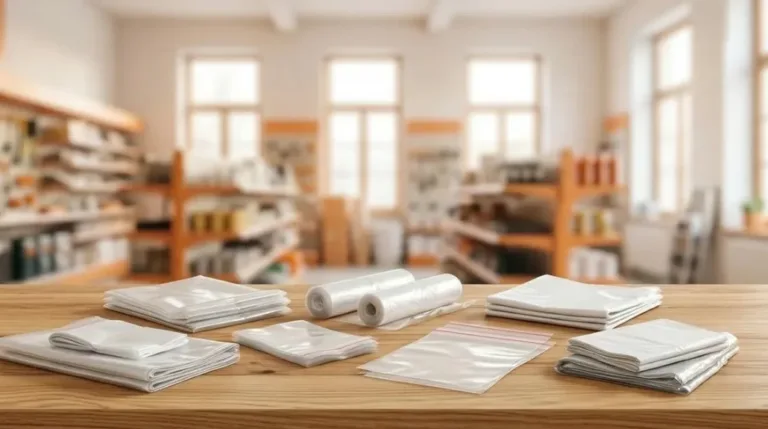
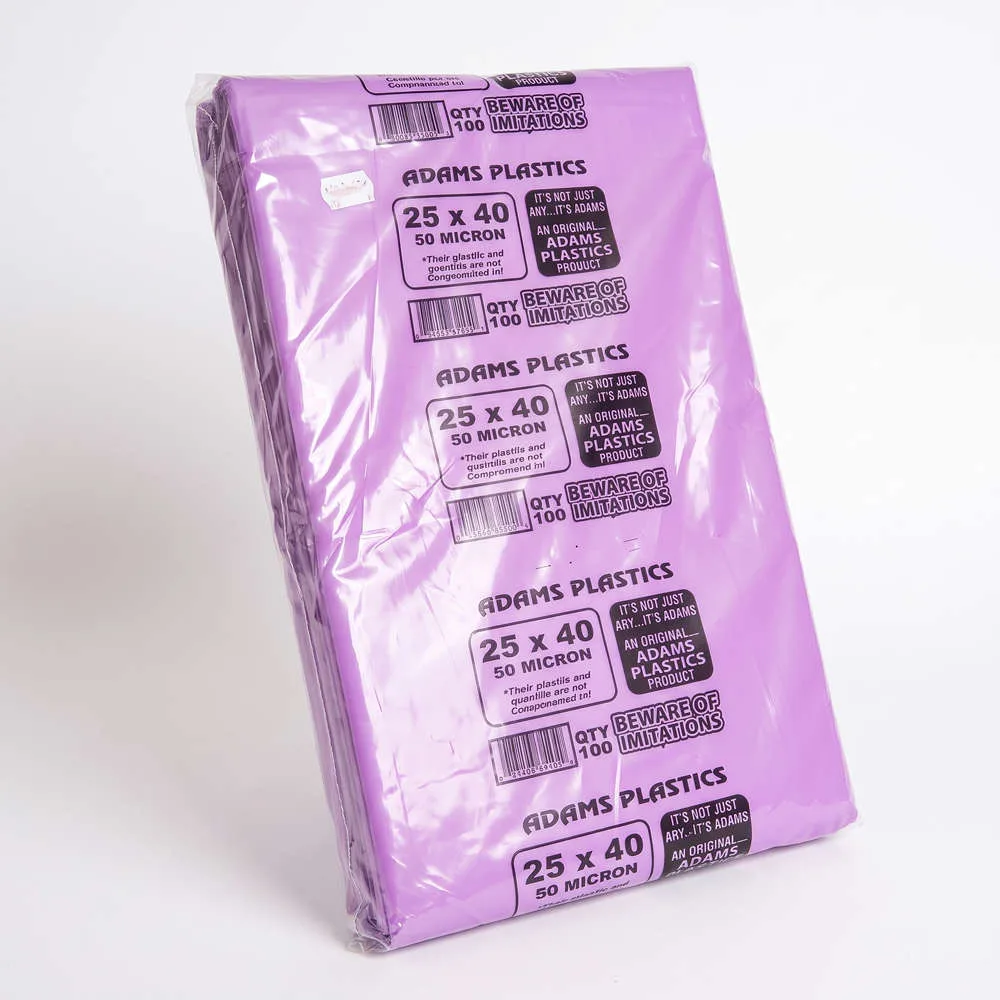
Plain, transparent, open-top bags. They show off your product, are easy to fill and come in loads of sizes. At 50 micron, like our Adams Clear Plastic Bag 25 x 40 x 50 micron, they feel sturdy enough for retail shelves. Lighter 20 micron versions are perfect for high-volume counter packing.
2. Punched vs not punched bags
You will see “punched” in some product names, such as the 25 x 40 x 20 punched bag. Punched bags have small holes that let air escape, which makes them easier to pack, stack and seal without trapping a balloon of air. Not-punched bags stay airtight, which is what you want for moisture-sensitive goods, liquids or anything going into the freezer.
3. Butcher bags
Thicker, tougher bags made to cope with bones, blood and freezers. Butcheries, hunters and home bulk-buyers use them for mince, chops and portions. Sizes go right up to the 60 x 90 x 70 butcher bag for big cuts. We tested the big freezer question in are plastic butcher bags freezer safe?
4. Ice bags
Ice block makers and ice vendors need bags that will not split when water expands as it freezes. The Adams 12 x 20 ice bags are made for exactly that. Read our guide on whether you can freeze ice block plastic bags safely before you fill your first batch.
5. Zip-lock bags
Resealable and reusable. Ideal for spices, seeds, small parts, jewellery, sample packs and anything the customer will open and close many times. Our 40 micron range runs from a tiny 65 x 80 mm zipper bag up to 215 x 315 mm.
6. Vacuum bags
Thick 70 micron bags made for vacuum sealing machines. Removing the air slows freezer burn and spoilage, which makes them a favourite for biltong, cheese, meat and fish. Try the 20 x 30 vacuum bags as a good all-round size.
7. Carrier bags
The handled bags you hand over at the till, from the Mini Tuff One to the Super Jumbo Tuff (45 micron). These are the bags most affected by South Africa’s plastic bag rules (more on that below).
8. Speciality bags
There is a bag for almost everything: popcorn bags for snack sellers, perforated polyprop bags with crystal clarity for sweets and baked goods, and heavy-duty refuse bags for the back of house. For bulk produce, feed and charcoal, woven sacks are a different animal altogether. See whether woven polypropylene bags are waterproof.
Plastic Bag Size Guide: What Fits in What?
Sizes are listed as width x length in centimetres. Always leave room at the top for sealing or tying, usually 3 to 5 cm. Here is a rough guide to what fits comfortably:
| Bag size (cm) | Roughly fits | Popular with |
|---|---|---|
| 15 x 25 | 500 g of dry goods, sweets, small spares, a few rolls | Spaza shops, hardware counters, home bakers |
| 18 x 30 / 19 x 39 | Long, narrow items like baguettes, boerewors coils, biltong sticks | Bakeries, butcheries, biltong shops |
| 20 x 30 | 1 kg sugar, rice or mealie meal, mince portions | Food repackers, butcheries |
| 25 x 40 | A standard loaf, 2 kg of produce, folded T-shirts | Bakeries, farm stalls, clothing sellers |
| 30 x 45 | A whole chicken, larger portions, linen | Poultry farmers, butcheries, laundries |
| 45 x 60 and 60 x 90 | Bulk meat cuts, catering quantities, large parts | Butcheries, hunters, caterers |
Quick test: lay your product flat on a table and measure its width plus its thickness. That total is the minimum bag width you need. Then add the product’s length plus 5 cm for the bag length.
LDPE, HDPE or PP? The Plastic Behind the Bag
Most packaging bags are made from one of three polymers, each with its own recycling code:
- LDPE (code 4) is soft, stretchy and clear. It is the material behind most clear packaging bags, butcher bags and cling film. According to Plastics SA, LDPE is the most widely recycled packaging polymer in South Africa.
- HDPE (code 2) is crinkly, slightly milky and very strong for its thickness. You see it in thin carrier bags and produce bags.
- PP (code 5), polypropylene, is stiffer with glass-like clarity. It is used for crisp, shiny bags that make baked goods and sweets look their best, and for woven sacks.
Want to see how resin pellets become a finished bag? Our article on how heavy-duty plastic bags are made explains the blown film process step by step. It is surprisingly satisfying.
How to Close and Seal Packaging Bags
A great bag with a poor closure is still a poor package. Your main options:
- Heat sealing gives a clean, tamper-evident, professional finish. Match the temperature to the material and thickness. We explain the details in how to seal clear plastic bags properly.
- Bag closers and tape are fast and cheap for bread, produce and counter sales. See the bag closing range, or keep a roll of clear sellotape at the packing station.
- Zip-lock closures are built in, so the customer can reseal.
- Vacuum sealing removes air and seals in one go, ideal for long freezer storage.
- Knot or twist: free, but it looks home-made and is not tamper-evident.
Presentation tip: customers judge your product in about two seconds. A crystal-clear bag, a neat heat seal and a printed sticker can make a R30 product look like it belongs on a deli shelf.
Freezing Food in Plastic Bags: Do’s and Don’ts
Freezing is where thin, cheap bags let you down. They go brittle, crack and let cold air in, which causes freezer burn. The USDA Food Safety and Inspection Service explains that freezer burn is caused by air reaching the surface of the food. It is not dangerous, but it ruins taste and texture.
- Do use thicker bags (butcher or vacuum bags) for meat and long storage.
- Do squeeze out as much air as possible before sealing.
- Do label every bag with the contents and date. A permanent marker is your best friend.
- Do freeze flat, then stack. Flat packs freeze faster and save space.
- Don’t use punched bags in the freezer.
- Don’t overfill ice bags. Water expands when it freezes.
How long can it stay frozen? The FoodSafety.gov cold storage charts note that food kept continuously at -18°C stays safe indefinitely, and that the recommended times are about quality. Good packaging is what protects that quality.
South African Plastic Bag Rules in Plain English
If you hand plastic carrier bags or flat bags to customers at the point of sale, there are rules you should know about. This is a simplified summary, not legal advice:
- Minimum thickness: carrier bags and flat bags made or sold for use in South Africa must be at least 24 microns thick under the national compulsory specification. You can read the specification on gov.za.
- Environmental levy: qualifying carrier and flat bags carry a plastic bag levy collected through SARS. The SARS levy policy lists items that are treated differently, such as bread bags, refuse bags, bin liners and household bags.
- Recycled content: amendments to the Plastic Carrier Bags and Plastic Flat Bags Regulations phase in rising minimum levels of post-consumer recycled plastic for carrier and flat bags, reaching 100% from January 2027.
The good news: buying from an established supplier means the compliance work is done before the bag reaches you.
Want to cut down on plastic altogether? We wrote a practical guide on how to reduce plastic waste in retail stores, from auditing your use to choosing recyclable options.
5 Ways to Spend Less on Packaging Bags
- Buy by the bale. Product names tell you both pack and bale sizes (for example “100 per pack, 500 per bale”). Bales almost always work out cheaper per bag.
- Do not over-spec. If a 20 micron bag does the job, a 50 micron bag is just money in the bin.
- Standardise sizes. Three well-chosen sizes usually beat ten random ones. You order more of each and waste less.
- Calculate your cost per pack. Include the bag, closure, label and your time. Our guide on how to calculate packaging costs for takeaways gives you a simple formula you can reuse.
- Store bags properly. Keep them out of direct sun and away from heat so they do not go brittle or stick together.
Running a takeaway as well? Our roundup of the best fast food packaging in South Africa covers containers, foil and boxes, and the fast food packaging range has everything in one place.
Plastic Bags for Packaging: FAQ
What thickness plastic bag do I need for packaging?
For most retail and food packaging, 50 micron is the sweet spot. Use 20 micron for light, high-volume items like bread and produce, and 70 micron for meat, vacuum packing or heavy and sharp items.
Are clear plastic bags food safe?
Bags made for food packaging, such as clear LDPE packaging bags, butcher bags and vacuum bags, are intended for direct food contact. Avoid using refuse bags or coloured carrier bags for loose food.
What size plastic bag do I need for a loaf of bread?
A 25 x 40 cm bag fits a standard loaf with room to close it. Long rolls and baguettes suit narrow bags such as 18 x 30 or 19 x 39 cm.
What does 25 x 40 x 50 mean on a plastic bag?
25 cm wide, 40 cm long and 50 microns thick.
Can I buy small quantities of plastic bags?
Yes. Most of our bags are sold per pack (usually 100 or 200 bags), with bales available when you are ready to buy in bulk.
Where can I buy plastic bags for packaging near me?
Coolpack is based in Paulpietersburg, KwaZulu-Natal, and delivers across South Africa. Browse the full plastic bags range online, or pop in if you are in the area.
The Bottom Line
The right packaging bag is the one that fits your product, survives its journey and makes it look good, at the lowest cost per pack. Know your microns, measure your product, pick the right closure and buy in bales once you know what works.
Find your bag
Browse more than 40 options in our plastic bags range, from 20 micron counter bags to 70 micron vacuum bags. Not sure which one fits? Ask the Coolpack team and we will help you choose, or arrange a bulk quote.